I used to think that learning how to build a balanced meal meant I needed to spend my Sunday afternoons meticulously weighing out organic kale and prepping twenty identical glass containers of quinoa. Honestly? That kind of “aesthetic” meal prepping felt more like a second job than a way to actually eat. Between managing freelance projects and trying to keep my urban garden from turning into a jungle, the last thing I had the bandwidth for was a kitchen setup that looked like a science experiment. Most of the advice out there makes it sound like if you aren’t following a rigid, color-coded macro plan, you’re somehow failing at adulthood.
But here’s the truth: you don’t need a culinary degree or a massive grocery budget to fuel your body properly. In this post, I’m breaking down a realistic, low-stress framework for how to build a balanced meal that actually fits into a hectic, real-world schedule. We aren’t chasing perfection or Instagram-worthy plating; we are building functional systems that prioritize nutrition without the mental overwhelm. Let’s get into the practical stuff you can actually use tonight.
Table of Contents
The Plate Method for Nutrition Without the Math Stress
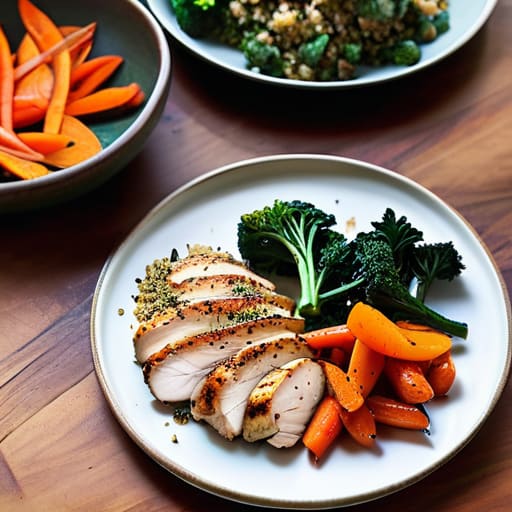
Look, I’ve never been one for weighing out grams of chicken or obsessing over a complex macronutrient distribution guide while I’m trying to finish a project deadline. It’s exhausting, and frankly, it’s not sustainable when you’re living a real life. Instead, I swear by the plate method for nutrition. It’s a visual shortcut that takes the guesswork out of your dinner without requiring a calculator.
The basic setup is pretty intuitive: fill half your plate with colorful veggies, a quarter with protein, and the remaining quarter with your preferred carbs. By focusing on these healthy food proportions, you’re naturally managing your energy levels throughout the evening. It’s less about strict calorie counting and more about finding a sustainable protein vegetable carbohydrate ratio that keeps you full.
I also like to think about nutrient density in meals as a way to “level up” the plate. If you’re using a smaller plate, you’re practicing a form of effortless portion control for healthy eating without feeling deprived. It’s about making sure every bite actually serves a purpose for your body, rather than just filling space.
Finding Your Ideal Protein Vegetable Carbohydrate Ratio
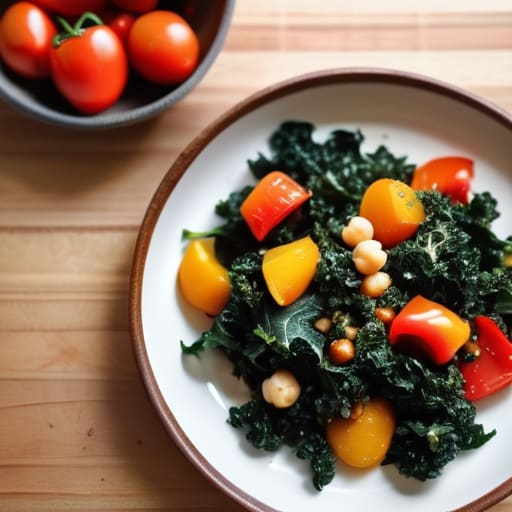
Now, I know what you’re thinking: “Audrey, I’m not a nutritionist, and I definitely don’t have time to track every gram of food.” Trust me, I get it. If I had to weigh my chickpeas every single night, I’d probably just give up and order takeout. Instead of obsessing over a rigid macronutrient distribution guide, I like to think of it as a sliding scale. Your ideal protein vegetable carbohydrate ratio isn’t set in stone; it shifts depending on whether you’ve just finished a heavy lifting session or if you’re having a low-key Tuesday working from my couch.
The trick is to listen to how your body actually feels an hour after eating. If you’re crashing by 3:00 PM, you might need to lean a little heavier on the healthy food proportions that include complex carbs for sustained energy. If you’re feeling sluggish and heavy, try bumping up the greens. It’s less about mathematical precision and more about finding that sweet spot of satiety that keeps you fueled without the post-lunch brain fog.
Five ways to keep your kitchen from becoming a source of stress
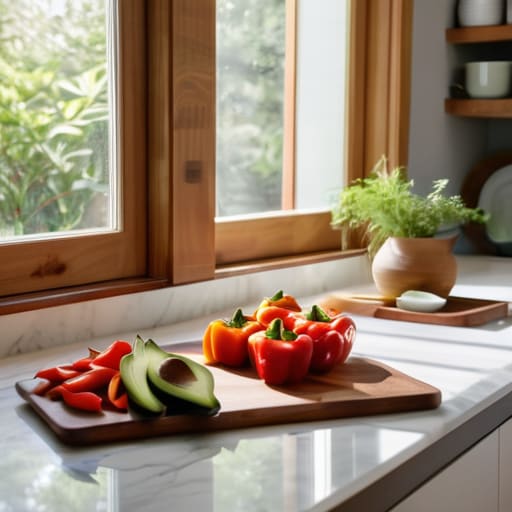
- Keep a “cheat sheet” of staples in your pantry. I’m talking about things like canned chickpeas, quinoa, or frozen spinach—stuff that doesn’t require a grocery run to turn into a real meal when you’re running on fumes.
- Don’t fear the frozen aisle. Honestly, frozen veggies are often more nutritious than the “fresh” stuff that’s been sitting in a truck for a week, and they’re a lifesaver when you don’t have the energy for chopping.
- Use the “Sauce Strategy” to prevent flavor fatigue. If you have the same base of protein and grains every day, just swap the sauce—tahini one night, a spicy sriracha mayo the next. It keeps things interesting without adding extra cooking steps.
- Master the art of the “assembly meal.” Some nights, “cooking” just means putting high-quality deli meat, some pre-washed arugula, and a slice of good sourdough on a plate. It counts, and it’s balanced enough to keep you going.
- Clean as you go, but keep it realistic. I don’t expect you to have a sparkling kitchen after every meal, but washing your cutting board while the pan is heating up makes the post-dinner cleanup feel a lot less like a mountain you can’t climb.
Forget the Food Scale
Stop trying to treat your kitchen like a chemistry lab; a balanced meal isn’t about hitting exact gram counts, it’s just about making sure you’ve got enough fuel in the tank to actually function by 3:00 PM.
Audrey Lin-McCallum
Keeping It Real in the Kitchen
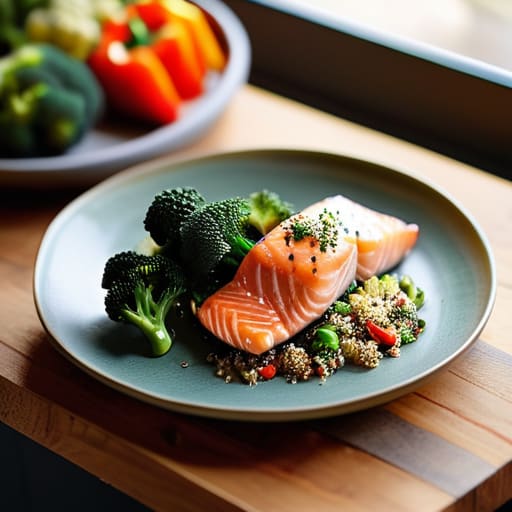
At the end of the day, building a balanced meal isn’t about mastering complex macro calculations or spending three hours prepping aesthetic grain bowls. It’s really just about getting back to the basics: grabbing a solid protein, adding some fiber-rich veggies, and fueling up with enough carbs to keep your brain from fogging over by 3 PM. Whether you’re using the plate method as a visual guide or just playing around with different ratios to see what makes you feel best, the goal is to remove the guesswork so you can actually eat. You don’t need a culinary degree to make a plate that works; you just need a little bit of intention and a functional system that fits your actual life.
Please, do yourself a favor and let go of the idea that a “healthy” meal has to look like a professional photoshoot. Some days, a balanced meal is a quick stir-fry; other days, it might just be a well-timed tuna salad while you’re catching up on emails. As long as you are nourishing your body with enough variety to keep your energy steady, you are winning. We are building habits here, not chasing an impossible standard of perfection. Focus on consistency over intensity, and remember that progress is always better than perfection when it comes to how you fuel your day.
Frequently Asked Questions
What do I do if I’m eating out or grabbing something quick from a deli and can't exactly control the portions?
Look, we’ve all been there—staring at a deli menu or a restaurant plate feeling like all our “systems” just went out the window. When you can’t control the kitchen, just use your eyes. Aim for the “visual split”: try to make sure half your plate looks like something grown in the ground, a quarter is your protein, and the last bit is your starch. If it’s a takeout container? Just eyeball those proportions before you dive in.
How do I handle "balanced" meals when I'm having a high-stress day and just really want comfort food?
Look, I get it. Some days, a kale salad feels like a personal insult. When stress hits, don’t fight the craving; just pivot the execution. If you want mac and cheese, go for it—but maybe throw in some frozen peas or a handful of spinach at the end. It’s about “crowding in” the good stuff rather than stripping away the comfort. We’re aiming for functional fuel, not a punishment for having a hard day.
Do I actually need to track calories, or is focusing on the food groups enough to see a difference in my energy levels?
Honestly? For most of us, tracking every single calorie is just a fast track to burnout. It turns eating into a math project rather than a way to fuel your life. If your goal is steady energy, focusing on those food groups is way more sustainable. When you prioritize protein and fiber, your blood sugar stays stable, and that’s what actually stops the mid-afternoon crash. Focus on the quality first; the math can wait.