I used to think that if I wanted to master how to save on utility bills, I’d need to spend thousands on smart thermostats, solar panels, and some high-tech sensor system that talks to my fridge. Honestly, the idea that you need a curated, high-budget eco-home just to stop bleeding money every month feels like a total scam designed to make us feel inadequate. I grew up in a tiny apartment where we didn’t have fancy gadgets; we just had a radiator that hissed and a window that never quite shut right. I learned early on that real efficiency isn’t about buying your way into a “green” lifestyle—it’s about noticing the small, annoying leaks in your routine and plugging them.
I’m not here to sell you on an expensive lifestyle overhaul or a complicated spreadsheet you’ll never use. Instead, I want to share the low-maintenance tweaks I’ve actually implemented in my own life to keep my costs down without losing my sanity. We’re going to focus on practical, incremental changes that fit into a busy schedule and actually move the needle on your monthly statements. No fluff, no expensive gear—just real solutions that work.
Table of Contents
Low Effort Energy Efficient Home Improvements That Actually Stick

Look, I’m not about to tell you to rip out your drywall just to add more insulation. I don’t have the budget for a full-scale renovation, and frankly, neither do most of us. Instead, I like to focus on the low-hanging fruit—the kind of energy efficient home improvements that take twenty minutes but pay off for months. A great place to start is your windows. If you can feel a draft, you’re essentially paying to heat the sidewalk. Grab some heavy, thermal curtains; they act like a buffer, keeping the warmth in during winter and the heat out during summer without requiring a contractor.
If you’re feeling slightly more tech-savvy, looking into the smart thermostat benefits is a total game-changer for your sanity. I set mine up to dial back the AC while I’m at work or sleeping, so I’m not wasting money cooling an empty apartment. It’s a “set it and forget it” solution that fits perfectly into a busy schedule. These small, intentional tweaks are much more sustainable than trying to overhaul your entire life overnight.
Smart Thermostat Benefits for Your Chaotic Daily Schedule
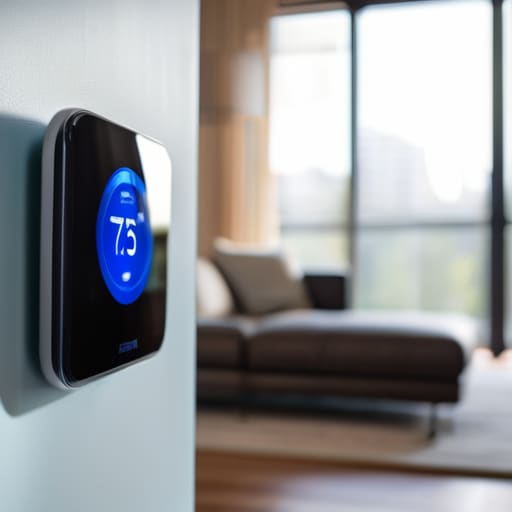
If your daily schedule feels less like a structured plan and more like a series of frantic pivots, you probably don’t have the mental bandwidth to remember if you actually turned the AC down before sprinting out the door. This is where the smart thermostat benefits really start to shine. Instead of manually adjusting the dial every time you leave for a meeting or head to the grocery store, these devices do the heavy lifting for you. They learn your patterns and adjust the temperature automatically, ensuring you aren’t paying to heat or cool an empty apartment while you’re busy living your life.
It’s one of those small tech investments that actually pays for itself by reducing monthly household expenses without requiring any daily maintenance. You can set “away” modes or geofencing so the system knows when you’re close to home, meaning you aren’t walking into a literal sauna or a walk-in freezer. It’s not about having a fancy, over-engineered gadget; it’s about creating a system that works in the background so you can focus on more important things—like finally finishing that book or actually eating a meal that didn’t come out of a microwave.
Small Tweaks for Big Savings (Without the Weekend-Long Projects)
- Audit your phantom power drains. We all have that one old lamp or coffee maker that stays plugged in 24/7; grabbing a cheap power strip for your media center or desk setup lets you kill the power to everything with one click when you head to bed.
- Stop treating your water heater like a luxury spa. Most of these units are set way higher than they need to be, so dial it down to about 120°F—you’ll save on heating costs and your skin won’t feel like it’s being boiled alive.
- Master the art of the “Laundry Reset.” Instead of running a half-empty machine just because you have one favorite sweater, wait until you have a full load, and always opt for cold water; modern detergents are good enough that you don’t need the heat to get things clean.
- Seal the “invisible” leaks in your windows and doors. You don’t need to replace the whole frame; just grab some weatherstripping or even a simple door draft stopper to keep that expensive climate-controlled air from escaping into the street.
- Optimize your fridge and freezer settings. If your fridge is set too cold or your freezer is half-empty, you’re basically paying to cool air that isn’t doing anything; keep the coils clear of dust and try to keep the freezer relatively full to help maintain the temperature.
## A Realist's View on Savings
“Saving on utilities isn’t about living in the dark or freezing in your own living room; it’s about setting up small, quiet systems that stop your money from leaking out of your house while you’re busy actually living your life.”
Audrey Lin-McCallum
Small Wins, Big Impact
At the end of the day, cutting back on your utility bills isn’t about living in a dark, freezing house or performing a complete lifestyle overhaul. It’s really just about those incremental shifts we talked about—swapping out a few old bulbs, letting your smart thermostat do the heavy lifting while you’re at work, and making sure your space is actually working for you rather than against you. Whether you’re tackling a quick DIY fix or just adjusting your daily routine, these small, manageable changes add up to significant savings that actually stay in your pocket instead of disappearing into a monthly bill.
I know that looking at a mounting stack of bills can feel incredibly overwhelming, especially when you’re already juggling a million other things. But please remember that you don’t have to fix everything by Tuesday. Pick one thing from this list—just one—and start there. We aren’t aiming for some perfectly optimized, Pinterest-worthy eco-home; we are just trying to build a life that feels a little more stable and sustainable. You’ve got this, and honestly, even the tiniest bit of progress is still a win for your sanity and your bank account.
Frequently Asked Questions
Is it actually worth the upfront cost to switch to LED bulbs, or am I just falling for a marketing gimmick?
Look, I get it. It feels like every “green” switch is just another way to drain your bank account. But honestly? The LED thing is one of the few times the marketing actually holds up. I swapped my old incandescent bulbs for LEDs last year, and while the upfront cost is slightly higher, the math works. They last forever and pull way less power. It’s a tiny, low-effort win for your wallet and your sanity.
How do I balance keeping my apartment comfortable without feeling like I'm throwing money down the drain every time I turn on the AC?
I totally get that feeling—it’s like every time you hear the AC kick on, you can practically hear your bank account sighing. Honestly, the trick is to stop treating your apartment like a constant refrigerator. Instead of aiming for “perfectly chilled,” aim for “manageable.” Close the blinds during the peak heat of the afternoon to block that solar gain, and use a simple floor fan to circulate air. It’s about small, tactical shifts rather than a constant battle with the thermostat.
Are there any specific "energy vampires" in a typical home office setup that I should be looking out for?
Oh, the home office is a prime offender. Since I work freelance, my desk is basically a magnet for “energy vampires.” Keep an eye on your dual monitors, those cheap LED desk lamps, and especially your printer—it’s often pulling power even when it’s just idling. My biggest culprit? My multi-port charging station. If everything is plugged in but not actually charging anything, you’re still bleeding money. Grab a power strip with a physical switch; it’s a total game-changer.